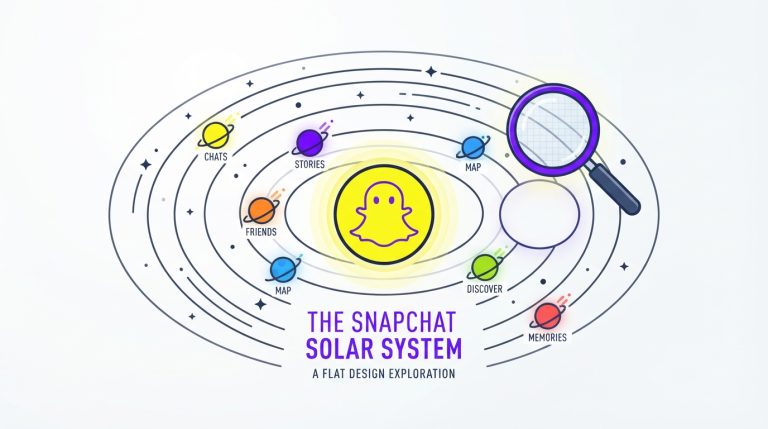
How Snapchat Determines Your Planet Ranking
Snapchat’s Planet Ranking feature is one of the most popular parts of Snapchat+, allowing users to see where they stand among a friend’s closest connections. While Snapchat doesn’t publicly reveal the exact formula behind its Friend Solar System, the platform does provide enough clues to help users understand how planet rankings are determined.
If you’ve ever wondered why you’re Mercury for one friend but Mars or Neptune for another, this guide explains the factors that influence your Snapchat Planet ranking.
What Is Snapchat Planet Ranking?
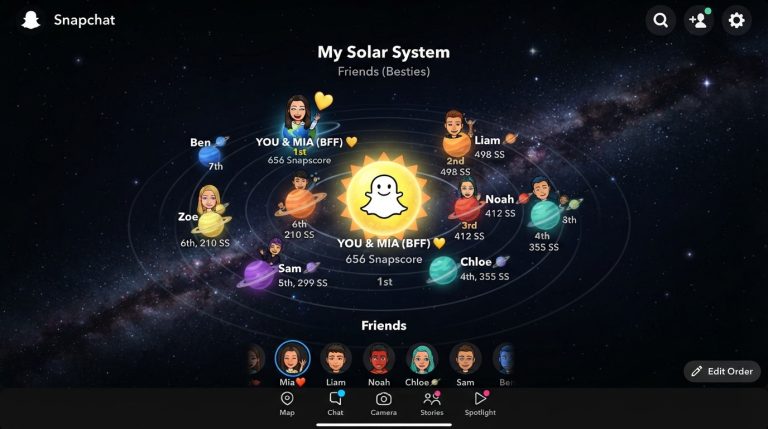
Snapchat Planet Ranking is part of the Friend Solar System feature available to Snapchat+ subscribers. In this system, you are represented as a planet orbiting around your friend’s Sun.
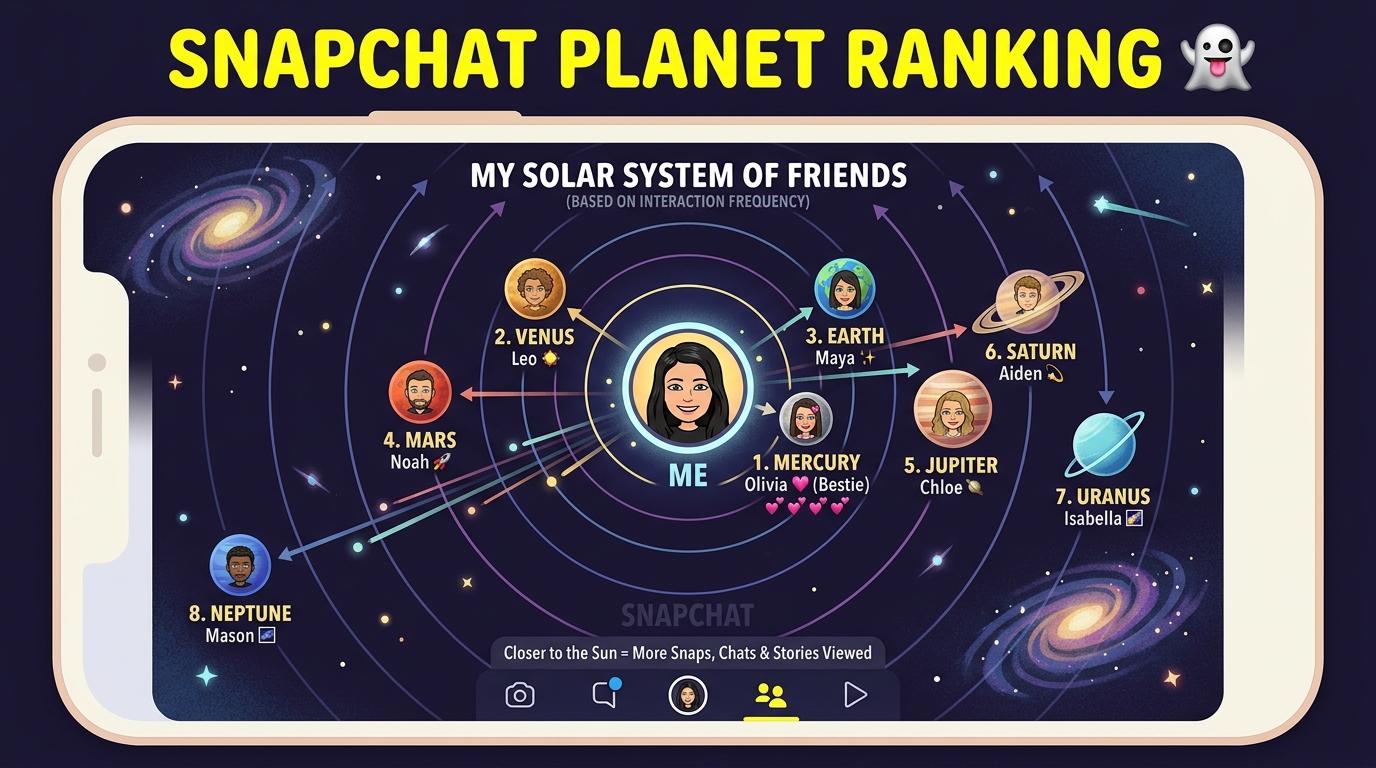
Each planet corresponds to a position in their Best Friends list:
- Mercury = 1st closest friend
- Venus = 2nd closest friend
- Earth = 3rd closest friend
- Mars = 4th closest friend
- Jupiter = 5th closest friend
- Saturn = 6th closest friend
- Uranus = 7th closest friend
- Neptune = 8th closest friend
The closer your planet is to the Sun, the stronger your interaction level with that user compared to their other friends.
The Main Factor: Interaction Frequency
The biggest influence on your planet ranking is how often you interact with a specific friend on Snapchat.
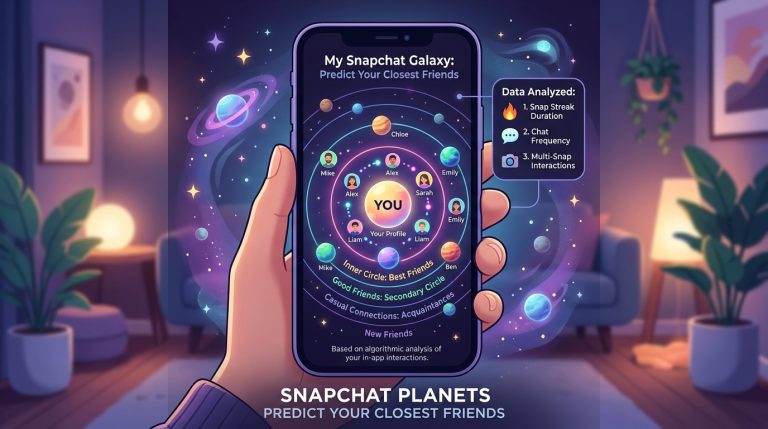
Snapchat analyzes engagement between users, including:
- Snaps sent
- Snaps received
- Chat messages
- Story interactions
- Reactions and responses
The more consistently two people communicate, the more likely they are to rank closer together in the solar system.
Snap Exchange Activity
Sending and receiving snaps remains one of the strongest signals in Snapchat’s ranking system.
Users who exchange photos and videos frequently tend to appear higher in each other’s Best Friends list. Consistent snap activity shows Snapchat that the friendship is active and ongoing.
Simply opening snaps without engaging regularly may not have the same impact as active two-way communication.
Chat Conversations Matter
Text conversations also contribute to planet rankings.
If you regularly message a friend through Snapchat Chat, those interactions can strengthen your position in their solar system. Long-term communication patterns often play an important role in determining friend rankings.
Active conversations generally carry more weight than occasional messages.
Story Engagement Influences Rankings
Interacting with stories can affect your ranking as well.
Examples include:
- Replying to stories
- Reacting to story posts
- Engaging with shared content
Users who frequently interact with each other’s stories may strengthen their friendship ranking over time.
Snapstreaks Can Help
Maintaining a Snapstreak often increases interaction frequency, which can positively influence rankings.
Since streaks require users to exchange snaps regularly, they naturally generate the consistent activity Snapchat uses to identify close friendships.
A long streak alone does not guarantee a top ranking, but it can contribute to a stronger position.
Recency of Activity Is Important
Snapchat appears to prioritize recent interactions over older activity.
For example, if you were highly active with a friend several months ago but rarely communicate now, your ranking may decrease.
Likewise, a newer friendship with frequent recent engagement can rise quickly through the planet rankings.
This dynamic approach helps keep rankings reflective of current relationships.
Your Ranking Depends on Their Other Friends
One important detail many users overlook is that planet rankings are relative.
Your position is not based solely on your interactions with one person. Snapchat also compares your activity against all of that user’s other close friends.
For example:
- You may exchange hundreds of snaps with a friend.
- Another user may exchange even more snaps with them.
- That person could become Mercury while you remain Venus or Earth.
This is why the same level of activity can produce different planet rankings for different users.
Why Your Planet Changes Over Time
Planet rankings are not permanent.
You may move closer to the Sun when:
- You send more snaps.
- You chat more frequently.
- You interact with stories regularly.
- You maintain active streaks.
You may move farther away when:
- Communication slows down.
- Other friends become more active.
- Streaks end.
- Engagement decreases over time.
Since Snapchat continuously updates friendship data, rankings can change without warning.
Does Snapchat Use a Secret Algorithm?
Yes. Snapchat uses an internal algorithm to calculate friendship rankings.
While the company has not disclosed the exact formula, user behavior suggests the algorithm evaluates:
- Interaction frequency
- Mutual engagement
- Recent activity
- Consistency of communication
- Relative activity compared to other friends
Because the algorithm is proprietary, no one outside Snapchat knows the precise weighting of these factors.
Why Two People See Different Rankings
Every Snapchat Solar System is personalized.
You might be Mercury in one friend’s system while appearing as Jupiter in another’s because each person’s Best Friends list is based on their own interaction history.
The ranking reflects your relationship with that specific user, not your overall Snapchat activity.
Does Planet Ranking Measure Real Friendships?
Not exactly.
Snapchat Planets measure activity within the app, not the strength of a real-world relationship.
Someone could be one of your closest friends offline but rank lower in Snapchat’s solar system if you primarily communicate through text messages, phone calls, or other social media platforms.
The feature is designed to reflect engagement on Snapchat rather than emotional closeness.